Memory Foam Pillow Guide

Memory Foam Neck Pillow: The Complete Buyer's Guide for 2026

If neck pain, stiffness, or tension headaches have become part of your morning routine, the right memory foam neck pillow can change that. Here's everything you need to know before buying one.

Why Your Neck Needs a Dedicated Support Pillow

Your cervical spine — the seven vertebrae between the base of your skull and your upper back — has a natural inward curve called a lordosis. During the day, your neck muscles actively maintain this curve. When you sleep, those muscles relax, and your pillow becomes the sole structural support for your cervical alignment.

Cervical spine anatomy showing why proper neck support during sleep is critical

Here's the problem: standard flat pillows weren't designed with cervical anatomy in mind. They provide a uniform surface that doesn't account for the gap between your neck and the mattress. Side sleepers face an additional challenge — the distance between the mattress and the side of the head is much greater than when lying on your back, requiring more pillow height at the edges.

The consequences of poor neck support compound over time. What starts as mild morning stiffness can progress to chronic tension headaches, referred pain between the shoulder blades, and restricted range of motion. Studies in ergonomic sleep research consistently show that pillow height, shape, and material directly influence cervical spine posture during sleep — and that contoured designs outperform flat pillows for maintaining neutral alignment.

A memory foam neck pillow specifically designed for cervical support addresses these issues by matching the pillow's contour to the neck's natural anatomy. Rather than forcing your neck to adapt to a flat surface, the pillow adapts to your neck.

How Memory Foam Neck Pillows Work

Memory foam neck pillows combine two functional elements: the material properties of memory foam itself, and the structural design of the pillow shape.

The Foam

Memory foam (viscoelastic polyurethane) responds to heat and pressure by softening and conforming. When your head rests on it, the foam yields progressively — sinking more where pressure is greatest (the heaviest part of your head) and maintaining firmer support where pressure is lighter (under your neck curve). This distributes your head's weight across a larger surface area rather than concentrating it on a few contact points.

High-density memory foam (50+ kg/m³) provides firmer, more lasting support. Lower-density foam feels softer but may compress permanently over time. For neck support specifically, medium-to-high density foam is preferred because the cervical area needs consistent, reliable support — not a surface that bottoms out.

The Contour

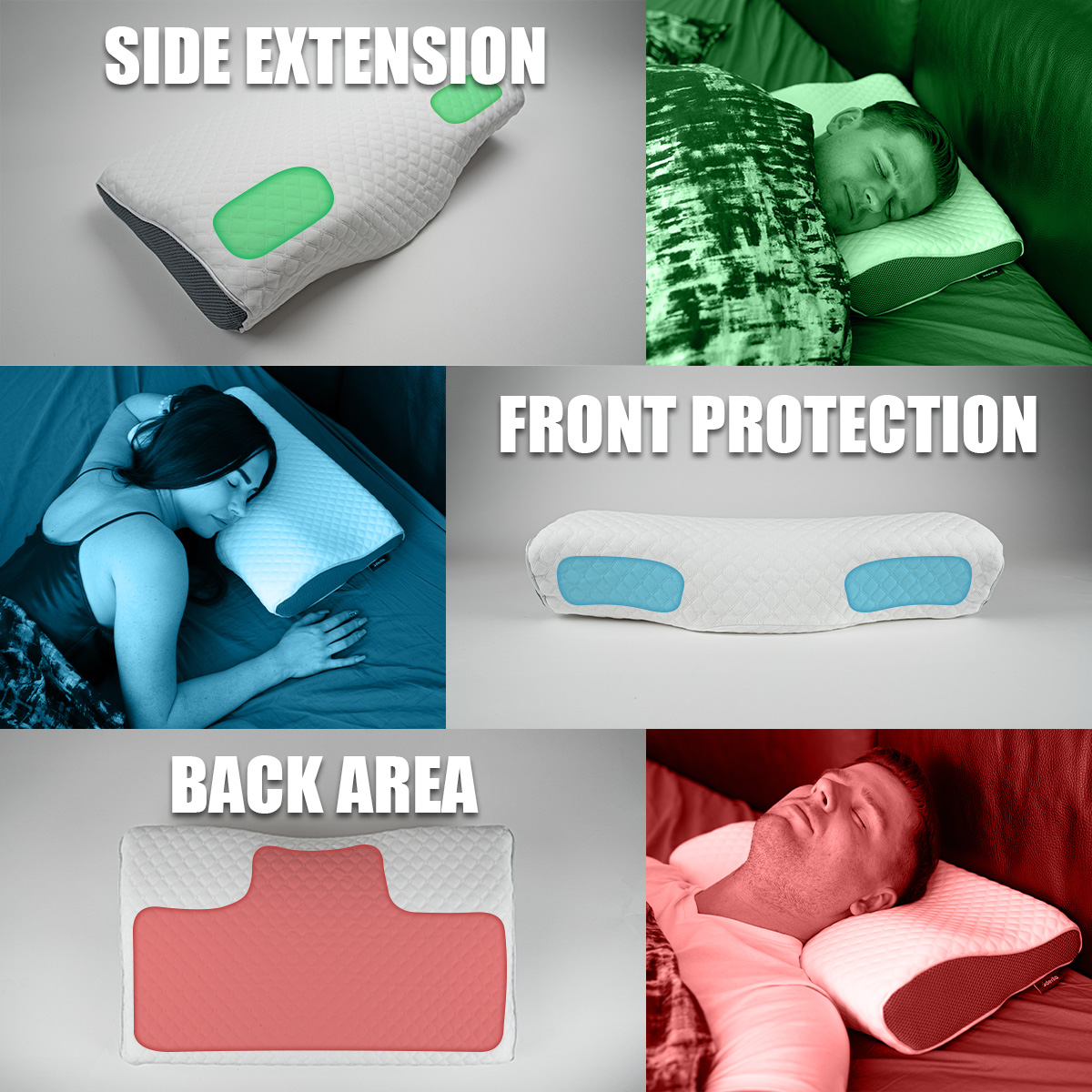
The shape of a neck pillow matters as much as the material. Effective neck pillow designs typically feature a raised front edge (or "cervical roll") that sits under the neck curve, a recessed centre that cradles the head without pushing it forward, and — in butterfly or wing designs — raised lateral sections for side sleeping support.

Contoured memory foam neck pillow showing different support zones for cervical alignment

The combination means the foam adapts to your specific anatomy within the constraints of an ergonomically optimised shape. You get personalised pressure distribution within a structure designed for correct spinal alignment.

Types of Memory Foam Neck Pillow Designs

Contoured / Cervical

Shaped profile with a raised front lobe for neck support and a recessed head cradle. The most common ergonomic design. Best for: back sleepers and those with defined neck pain.

Butterfly / Wing

Contoured centre plus raised lateral wings. Supports both back and side positions. Best for: combination sleepers who shift positions during the night.

Wave / Dual-Height

Two lobes of different heights — higher on one side, lower on the other. Flip for your preferred loft. Best for: people unsure of their ideal pillow height.

Traditional Shape

Standard rectangular pillow made from solid or shredded memory foam. Familiar feel, less cervical-specific support. Best for: people who want memory foam benefits without a learning curve.

Our take: For dedicated neck support, contoured and butterfly designs offer the most benefit. Traditional-shape memory foam pillows provide pressure relief but don't actively support the cervical curve the way shaped designs do.

Features That Actually Matter (And What's Just Marketing)

Worth paying attention to:

Marketing fluff you can mostly ignore:

Choosing a Neck Pillow by Sleep Position

Side Sleepers

You need the most pillow height — specifically at the sides. Look for butterfly/wing designs with raised lateral sections that fill the gap between your shoulder and head. The pillow should keep your head level with your spine when viewed from the front. If your head tilts downward toward the mattress, the pillow is too thin. If it tilts upward, it's too thick.

Recommended: Derila (butterfly design with raised wings) or adjustable-height options like the UTTU Sandwich Pillow.

Side sleeper using contoured memory foam neck pillow for proper cervical alignment

Back Sleepers

Focus on the cervical roll — the raised front edge that supports the neck curve. Your head should rest in the centre depression without being pushed forward into chin-to-chest flexion. A moderate pillow height (10–12 cm) with a defined cervical contour is ideal. Avoid anything too thick that pushes your chin toward your chest.

Stomach Sleepers

Most contoured memory foam neck pillows are not recommended for stomach sleeping. The elevated contours force the neck into hyperextension or lateral rotation when face-down, which can worsen pain rather than relieve it. If you must sleep on your stomach, choose a very thin, flat pillow — or consider gradually training toward side sleeping with a supportive transition pillow.

Combination Sleepers

If you shift between positions during the night, butterfly/wing designs are your best bet. They provide different support zones that activate depending on your position — the wings engage when you're on your side, and the central contour engages when you're on your back. This versatility is why butterfly designs have become the most popular contour style.

Common Buying Mistakes to Avoid

1. Giving up too soon

The single most common reason people return cervical pillows is quitting before the adjustment period ends. If you've spent years sleeping on a flat, unsupportive pillow, your neck muscles have adapted to that position. Switching to proper alignment can feel uncomfortable for 5–14 nights. Most users who push through this period report significant improvement. Set a calendar reminder for day 14 before deciding.

2. Buying based on softness

A pillow that feels amazing in-store or during a 30-second test may provide zero support over eight hours. Cervical support requires structure — which means the pillow should feel firm enough to resist your head's weight without collapsing. "Comfortable" and "supportive" aren't always the same thing, especially initially.

3. Ignoring pillow height for your body

A pillow that's perfect for someone with narrow shoulders may be too low for a broader-framed person. Side sleepers especially need to match pillow height to their shoulder width. If the manufacturer offers a single size, check measurements against your body frame.

4. Expecting a medical fix

Memory foam neck pillows can meaningfully improve posture-related neck discomfort, but they're not medical devices. If you have a diagnosed cervical condition — such as herniated discs, stenosis, or radiculopathy — consult your physiotherapist or orthopaedic specialist before changing your sleep setup.

Frequently Asked Questions

Do memory foam neck pillows actually help with neck pain?

For posture-related neck pain — the kind caused by poor sleeping alignment — yes, they can make a significant difference. Contoured memory foam pillows support the cervical curve and prevent the neck from spending eight hours in a compromised position. However, they're not a replacement for medical treatment for structural conditions like disc herniation.

How long does the adjustment period take?

Most people need 5–14 nights to fully adjust. The first few nights may feel unusual — even slightly uncomfortable — as your neck adapts to being properly supported rather than collapsed. This is normal and expected. Give it at least 10 days before deciding.

Are contoured pillows better than flat memory foam pillows?

For cervical support specifically, yes. Contoured designs actively support the neck's natural curve with a shaped profile. Flat memory foam pillows offer pressure relief but don't provide the structural cervical support that contoured designs do. If neck support is your primary goal, go contoured.

What's the best memory foam neck pillow for side sleepers?

Side sleepers should prioritise butterfly/wing designs with raised lateral sections. These fill the shoulder-to-head gap that flat and standard contoured pillows can't address. The Derila and similar butterfly designs score highest among side sleepers in user feedback. See our best memory foam pillow roundup for more options.

How much should I spend on a memory foam neck pillow?

The sweet spot for quality contoured memory foam pillows is $30–$60 / £25–£50. Below that, foam density tends to be too low for lasting support. Above that, you're often paying for brand premium or features (like gel infusion) that don't dramatically improve cervical support. The key spec to check is foam density — aim for 50+ kg/m³.

Our Top Pick for a Memory Foam Neck Pillow

After evaluating dozens of options, the Derila Memory Foam Pillow offers the best combination of cervical support, build quality, and value for most users. Its butterfly contour addresses both back and side sleeping, the foam density is solid, and it comes with a 30-day guarantee.

Derila memory foam neck pillow with spinal alignment support illustration
Check Derila Price & Availability → Read our detailed review · 30-day money-back guarantee