The Derila pillow is an ergonomic butterfly-contoured memory foam pillow — but it only works properly when you position it right. Most complaints about the Derila come from people who simply placed it on the bed the wrong way. This guide walks you through the correct setup for side sleeping, back sleeping, and stomach sleeping, plus how to break it in during the first week.
This is the number one question people have when unboxing the Derila, and getting it wrong makes the pillow feel uncomfortable.
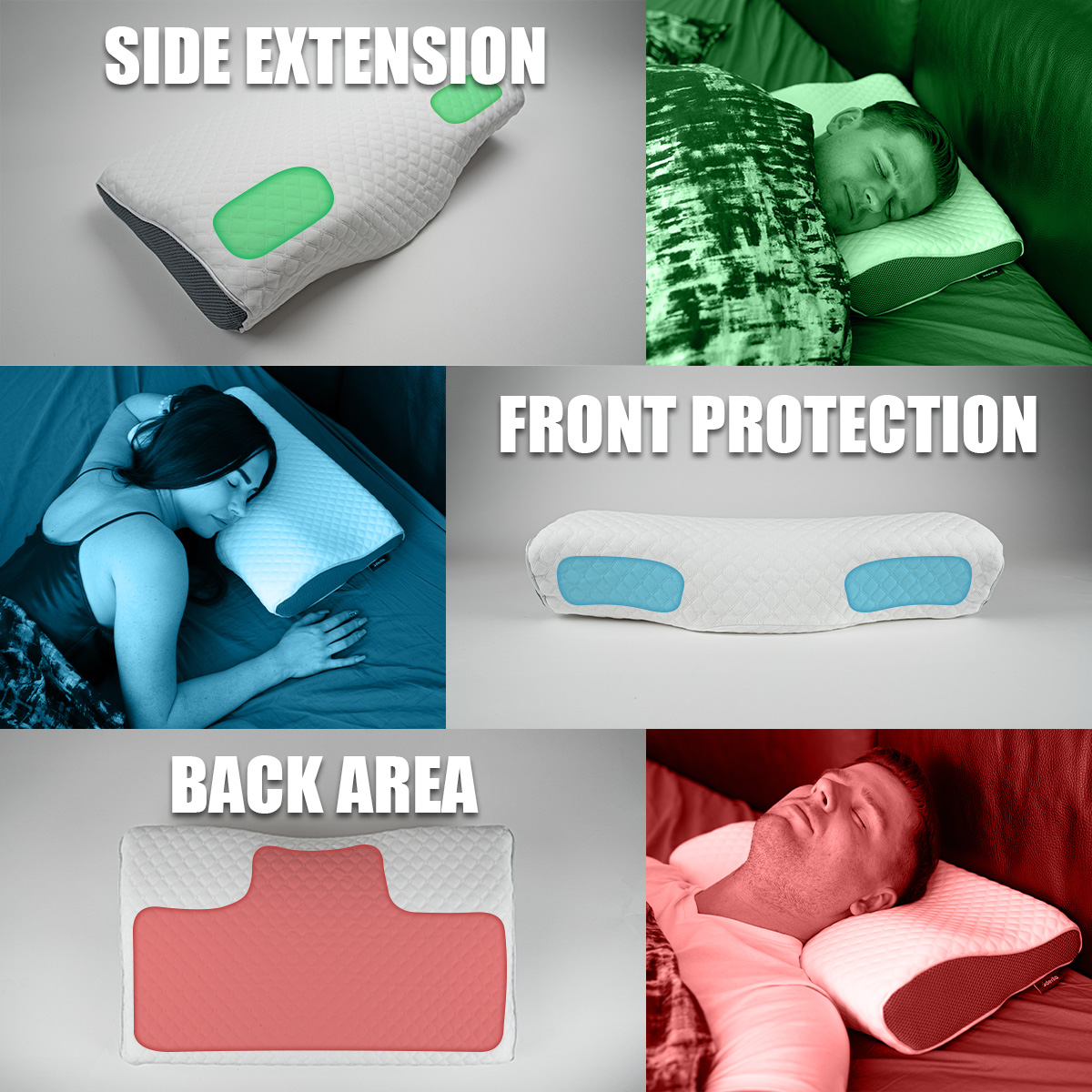
The Derila has a butterfly contour shape with two raised side wings and a lower center channel. The key rule is simple: the larger, taller wing always goes at the bottom (toward the mattress edge), and the lower, shallower curve sits near the top (toward the headboard).
Quick orientation check: Hold the pillow up and look at it from the side. One edge is taller than the other. The taller edge should support your neck, and the lower dip should cradle your head. If your neck is resting on the flat/low part, flip the pillow 180°.
The two "wings" on the left and right are designed for side sleeping — they fill the gap between your shoulder and ear to keep your spine straight. The center channel is where your head rests when sleeping on your back.
Side sleeping is where the Derila's butterfly design really shines. The raised side wings are specifically engineered to fill the shoulder-to-ear gap that regular flat pillows can't handle.
The thicker raised edge should be at the bottom of the pillow, closest to your shoulders. This is the cervical support ridge.
Don't put your head in the center — that's for back sleepers. Your head should rest on the left or right raised section. Your ear should sit in the natural curve of the wing.
Your shoulder should NOT be on the pillow. The bottom edge of the pillow should press against the top of your shoulder, filling the gap completely. This is what keeps your neck and spine aligned in a straight horizontal line.
Your nose, chin, and sternum should form a straight line. If your head tilts down toward the mattress, the pillow needs to be pushed more firmly against your shoulder. If your head tilts upward, you may need to let it settle — new memory foam takes a few minutes to compress to body heat.
For back sleeping, you use the center channel of the pillow rather than the wings.
The raised cervical ridge should sit directly under the curve of your neck, supporting the natural lordotic (C-shaped) curve of your cervical spine.
The dip in the middle of the pillow is designed to cradle the back of your head. You should feel your head settle naturally into this hollow, with the foam gently cupping around it.
Your chin should be in a neutral position — not tucked toward your chest and not tilted back. If you feel like your chin is pushed toward your chest, the pillow's cervical ridge may be too tall for you during the break-in period. Give the foam 3–5 nights to soften and conform to your neck shape.
Stomach sleeping is the hardest position for any contour pillow, including the Derila. The raised edges that help side and back sleepers can feel too tall for stomach sleepers, forcing the neck into an awkward upward angle.
Honest take: The Derila is not optimized for stomach sleeping. It can work, but you'll need to adjust your expectations. If you sleep exclusively on your stomach, a thinner, flat memory foam pillow may be a better fit. However, if you're a combo sleeper who rotates between positions, the Derila can still work for the occasional stomach position.
If you do want to try it face-down, use the lowest part of the center channel and turn your head to one side. Some stomach sleepers find it more comfortable to hug the pillow at an angle rather than placing it square under the face.
Memory foam pillows are not like down or polyester — they don't feel "right" out of the box. The Derila uses high-density memory foam that needs body heat and pressure to soften and conform to your unique head and neck shape.
Night 1–2: The pillow will feel firm, possibly too firm. This is normal. The foam hasn't had time to adapt to your body temperature and contour. You may wake up feeling like the pillow is "pushing" against your neck.
Night 3–4: You should notice the foam starting to soften in the areas where your head and neck apply the most pressure. The cervical ridge will feel less aggressive and more supportive.
Night 5–7: By the end of the first week, the pillow should feel noticeably different from night one. The foam will have developed a slight "memory" of your sleeping position, and the support should feel more natural.
Pro tip: If the pillow feels too firm in the first few nights, try placing it near a warm area (not directly on a heater) for 20–30 minutes before bed. Warmth softens memory foam temporarily and can help speed up the break-in process. You can also rest your head on it while reading or watching TV before sleep to pre-warm the foam.
The most common reason people return memory foam pillows is giving up before the break-in period is over. If you've only tried it for one or two nights and it feels "wrong," that's expected — not a sign that the pillow is bad.
The most common error. If the smaller curve is under your neck and the taller edge is at the top, the pillow will feel terrible. The tall edge always goes at the bottom near your shoulders.
The center channel is for back sleepers only. Side sleepers should use the left or right wing. Sleeping in the center while on your side means your head drops too low and your neck bends laterally.
Adding a second pillow underneath defeats the contour design entirely. The Derila is meant to be used alone directly on your mattress. Doubling up creates too much height and pushes your head forward into an unnatural position.
New memory foam needs 3–7 nights to break in. Your neck muscles also need time to adjust — if you've been sleeping on a flat pillow for years, the cervical support will feel strange at first. That's the foam doing its job, not a defect.
The removable cover isn't just for hygiene — it affects the feel and friction of the pillow surface. Memory foam without a cover can feel sticky against skin and the breathability is reduced. Always use the included cover, and wash it every 1–2 weeks.
The memory foam core should not be machine washed or submerged in water. Memory foam absorbs water and doesn't dry easily, which can lead to mold. Instead, spot-clean the foam with a damp cloth and mild soap. The removable outer cover is machine washable — use cold water and a gentle cycle, then air dry or tumble dry on low.
With proper care, a high-density memory foam pillow typically lasts 2–3 years before the foam starts losing its shape and support. Signs it's time to replace: the foam no longer bounces back after you press it, or you start waking up with neck stiffness again after a period of sleeping well on it.
You can, but standard rectangular pillowcases won't fit the contour shape well. The Derila comes with its own fitted cover designed for the butterfly shape. If you want an extra layer, a standard pillowcase will work loosely over it, though it may bunch up around the contours.
The Derila is not a medical device and is not clinically proven to treat sleep apnea. However, the elevated head position and open-airway alignment that contour pillows provide may help reduce mild positional snoring for some people. If you have diagnosed sleep apnea, consult your doctor — a pillow is not a substitute for CPAP therapy or other prescribed treatments. Read our detailed guide on Derila and sleep apnea for more information.
For neck pain caused by poor sleeping posture — which is the most common kind of non-injury neck pain — a contour pillow like the Derila can make a noticeable difference by maintaining cervical alignment. It's particularly effective for side sleepers who tend to get neck strain from flat pillows that don't fill the shoulder gap. For neck pain caused by medical conditions, injuries, or disc issues, see a healthcare professional before relying on a pillow for relief.
We don't have a video guide yet, but the step-by-step instructions above cover the exact same positioning — orient the taller edge toward your shoulders, side sleepers use the wings, back sleepers use the center channel, and give it at least 5 nights to break in.
Read our full Derila review to see if it's the right pillow for your sleep style, or check the current price below.
Check Derila Price & Availability → memoryfoampillowguide.com may earn a commission